Reviews of

Archive for the ‘Early Christianity’ Category

Early Christian Manuscripts: Examples of Applied Method and Approach

In Amulets, Brill, Dan Batovici, Early Christianity, Egypt, New Testament, Oxyrhynchus, Papyrology, Patristics, Reception history, Scripture, Textual Criticism, Thomas KRAUS, Tobias NICKLAS on June 13, 2012 at 6:12 pm

2012.06.13 | Thomas J. Kraus and Tobias Nicklas, eds. Early Christian Manuscripts: Examples of Applied Method and Approach. Texts and Editions for New Testament Study 5. Leiden, Boston: Brill, 2010. xx + 243 pp. ISBN: 9789004182653.

Reviewed by Dan Batovici, University of St Andrews.

Many thanks to Brill for kindly providing us with a review copy.

facebook.com/RBECS.org

This volume is intended as a papyrological follow-up of a previous volume, New Testament Manuscripts: Their Texts and Their World, published in the same series (TENT 2) in 2006. It features nine articles forming nine chapters varying in size between 15 and 45 pages. Read the rest of this entry »
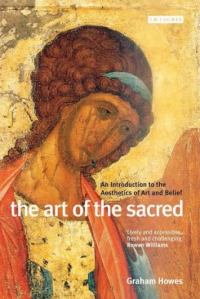
The Art of the Sacred: An Introduction to the Aesthetics of Art and Belief

In Christian Art, Early Christianity, Graham HOWES, I. B. Tauris, Iconography, Leonard Aldea, Reception history on May 19, 2012 at 8:28 pm

2012.05.09 | Graham Howes. The Art of the Sacred: An Introduction to the Aesthetics of Art and Belief. London: I.B.Tauris, 2010. ix + 190 pages. (PB) £18.99. ISBN: 9781845110062. (HB) £52.50 ISBN: 9781845110055.

Reviewed by Leonard Aldea, Durham University. 

RBECS would like to thank I.B. Tauris Publishers for kindly providing us with a review copy.

facebook.com/RBECS.org

The present volume is the 2010 reprint of the 2007 first edition. However, parts of the book itself and the research behind it are much earlier than that, as the author’s 1988 copyright attests. This is worth keeping in mind if one uses the book for research purposes.

Read the rest of this entry »

A Celebration of Living Theology: Engaging with the work of Andrew Louth

In Andrew LOUTH, Call for papers, Durham, Early Christianity, Justin A. Mihoc, Patristics, Reception history on March 1, 2012 at 12:39 pm

Durham University in conjunction with the Department of Theology and Religion will be hosting the conference ‘A Celebration of Living Theology: Engaging with the work of Andrew Louth’ on 9-12 July 2012 at Durham University. The conference aims to celebrate the work of Prof. Andrew Louth in the areas of Patristics, both Western and Eastern, Modern Theology and Theology as Life, as well as explore its reception outside the English-speaking world.

Confirmed plenary speakers are Antoine Arjakovsky, Lewis Ayres, Jane Baun, John Behr, Augustine Casiday, Mary Cunningham, Pavel Gavrilyuk, Thomas Graumann, Cyril Hovorun, John Milbank, Kallistos Ware and, of course, Andrew Louth. Read the rest of this entry »

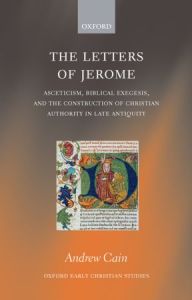
The Letters of Jerome: Asceticism, Biblical Exegesis, and the Construction of Christian Authority in Late Antiquity

In Andrew CAIN, Early Christianity, Epistolography, Jerome, Justin A. Mihoc, Oxford University Press, Patristics, Reception history, Scripture on January 28, 2012 at 1:31 pm

2012.01.02 | Andrew Cain, The Letters of Jerome: Asceticism, Biblical Exegesis, and the Construction of Christian Authority in Late Antiquity. Oxford Early Christian Studies. Oxford/New York: Oxford University Press, 2009. Pp. xiv + 286. isbn: 978-0-19-956355-5 (Hardback). £67.00.

Reviewed by Justin A. Mihoc, Durham University.

This is a pre-print version of the review published in Sobornost: incorporating Eastern Churches Review 33.1 (2011), pp. 90-93.

This highly erudite and fascinating monograph by Andrew Cain, an already prominent Jerome scholar, focuses on Jerome of Stridon’s epistles and their (intended) reception. Read the rest of this entry »

Francis B. Watson, “Gospel Writing: A Canonical Perspective”

In Durham, Early Christianity, Francis B. WATSON, Gospels, Justin A. Mihoc, NT reception history, SEMINAR REPORTS on January 17, 2012 at 8:13 pm

This is a report on a book preview by Prof Francis Watson, Professor of New Testament Exegesis at Durham University, at the New Testament Research Seminar, Department of Theology and Religion, Durham University, 12th of December 2011. The list of forthcoming papers in the NT Research Seminars at Durham University can be found here

The second book preview in the series inaugurated by Prof John Barclay at the beginning of November (2011) here, at Durham University, was the forthcoming monograph by Prof Francis Watson. His approach towards Gospel studies focuses on the reception and interpretation of the canonical texts, without neglecting the non-canonical gospels. In Prof Watson’s words, the phenomenon of reception is almost a universal precondition of the historical knowledge in general. History of the impact that one writing or figure had in history, or Wirkungsgeschichte as Gadamer puts it, is not a uniquely theological concept, but has specific particularities within the Christian context. And reception is not only reconstruction. Read the rest of this entry »

Lewis Ayres, “Grammar, Polemic and the Development of Patristic Exegesis 150-250”

In Durham, Early Christianity, Lewis AYRES, Patristics, Reception history, Second century, SEMINAR REPORTS on November 29, 2011 at 2:46 pm

This is a report on a paper presented by Prof Lewis Ayres, Lecturer in Greek Patristics and Byzantine Studies in the Department of Theology and Religion at Durham University, at the NT Research Seminar at the Department of Theology and Religion, Durham University, 28th of November 2011.

The list of forthcoming papers in the New Testament Research Seminars at Durham University can be found here. You can follow RBECS on Facebook, here.

An extensive written treatment of Prof Ayres’ argument was circulated in advance to the seminar members. His great and very interesting presentation emerged from his existing work on the 4th and 5th century Trinitarian controversies that shaped a certain way of reading Scripture. Prof Ayres’ aim was to identify as much as possible the origins of the classical Patristic exegesis and the significance of the ancient Grammarians in the development of the Patristic interpretative techniques. Read the rest of this entry »

Krastu Banev, “The Idea of the Numinous in the 4th Century: Abraham, John Chrysostom, and Rudolf Otto in Dialogue”

In Abraham, Durham, Early Christianity, Justin A. Mihoc, Krastu BANEV, Numinous, Patristics, SEMINAR REPORTS on November 25, 2011 at 5:07 pm

This is a report on a paper presented by Dr Krastu Banev, Lecturer in Greek Patristics and Byzantine Studies in the Department of Theology and Religion at Durham University, at the Patristics Research Seminar at the Department of Theology and Religion, Durham University, 24th of November 2011.

The list of forthcoming papers in the Patristics Research Seminars at Durham University can be found here. You can follow RBECS on Facebook, here.

In this very inspiring paper, Dr Banev intended to show the similarities and differences between the idea of religious experience and the numinous employed by John Chrysostom (c. 347–407) and Rudolf Otto (1869–1937).

There is a gap in the scholarly record with regard to the treatment of the idea of ‘numinous dread’ (or the mysterium tremendum et fascinans, as Otto calls it).

Read the rest of this entry »

Early Christian Books in Egypt

In Dan Batovici, Early Christianity, Egypt, Papyrology, Princeton University Press, Roger S. BAGNALL, Textual Criticism on November 22, 2011 at 12:30 am

2011.11.09 | Roger S. Bagnall, Early Christian Books in Egypt. Princeton: Princeton University Press, 2009. Pp. xv + 109. ISBN: 9780691140261 (Cloth).

Reviewed by Dan Batovici, University of St Andrews.

RBECS would like to thank Princeton University Press for kindly providing us with a review copy. You can find RBECS on facebook, here.

A shorter version is now published in Sacra Scripta 9.2 (2011).

This is a stirring small volume from a prominent papyrologist, containing the published form of four lectures offered in May 2006 at the École Practique des Haute Études of Paris, which were published simultaneously in French (with Droz, see here). Read the rest of this entry »